

To work legally in the UK private security industry, you must complete a licence-linked qualification and then apply for an SIA (Security Industry Authority) licence.If you are just getting started, the best option for maximum employability is the SIA Door Supervisor Course, as it covers everything a security guard does, but also allows you to work in licensed premises (pubs, bars, and clubs).1. Choose Your Course TypeThere are several licence-linked courses depending on the career path you want to pursue:Door Supervisor (6 Days): The most popular and versatile. Allows you to work at clubs, pubs, festivals, retail, offices, and events. Covers conflict management and physical intervention.Security Guard (4 Days): For static guarding, retail, construction sites, and office buildings. Note: You cannot work in venues that serve alcohol with this licence.CCTV Operator (3 Days): Allows you to work in CCTV control rooms for councils, shopping centres, or airports.2. Mandatory First Aid RequirementBefore enrolling on any SIA front-line course, you must hold a valid Emergency First Aid at Work (EFAW) certificate (or equivalent, such as FAW, FPOS, or FREC). If you don’t have one, most training providers allow you to bundle it with your SIA booking.3. Training and Licence CostsGetting an SIA badge requires two main costs:The Training Course: Prices generally range from £200 to £300 depending on your location and the provider.The SIA Application Fee: This is a separate flat fee of £204 for a 3-year frontline licence, paid directly to the SIA once you pass your course.4. Step-by-Step Process to Start WorkingStep 1. Enrol on an approved course: You can book your training through trusted, nationally approved providers like Get Licensed or via the GOV.UK Training Provider Finder to find local venues near Blackburn.Step 2. Complete the training and pass exams: Attend the in-person classroom hours. You will need to complete multiple-choice exams and, depending on the course, a practical physical intervention assessment.Step 3. Apply for the SIA Licence: Once you receive your certificate, create an account on the GOV.UK Apply for an SIA Licence page. You will need to pay the £204 fee and complete identity and criminal background checks (DBS).Step 4. Receive your badge: Your 3-year licence will arrive in the post.If you tell me what specific security role interests you most and your timeline for starting, I can help you find approved training centres and availability
You will need an SIA licence if the work you will be doing is part of a ‘contract for services’ and involves a ‘licensable activity’.
The following job activities are all licensable:
- manned guarding
- key holding
- vehicle immobilisation (Northern Ireland only)
- Manned guarding
- Manned guarding involves the guarding of people, property or premises.
In this context:
- ‘property’ usually means objects that belong to a person or business
- ‘premises’ means buildings or land that belong to a person or business
There are 5 types of manned guarding licence. They are all front line licences.
Cash and valuables in transit
You need a cash and valuables in transit licence if you guard property against damage or theft and you transport it in a vehicle designed for secure transportation.
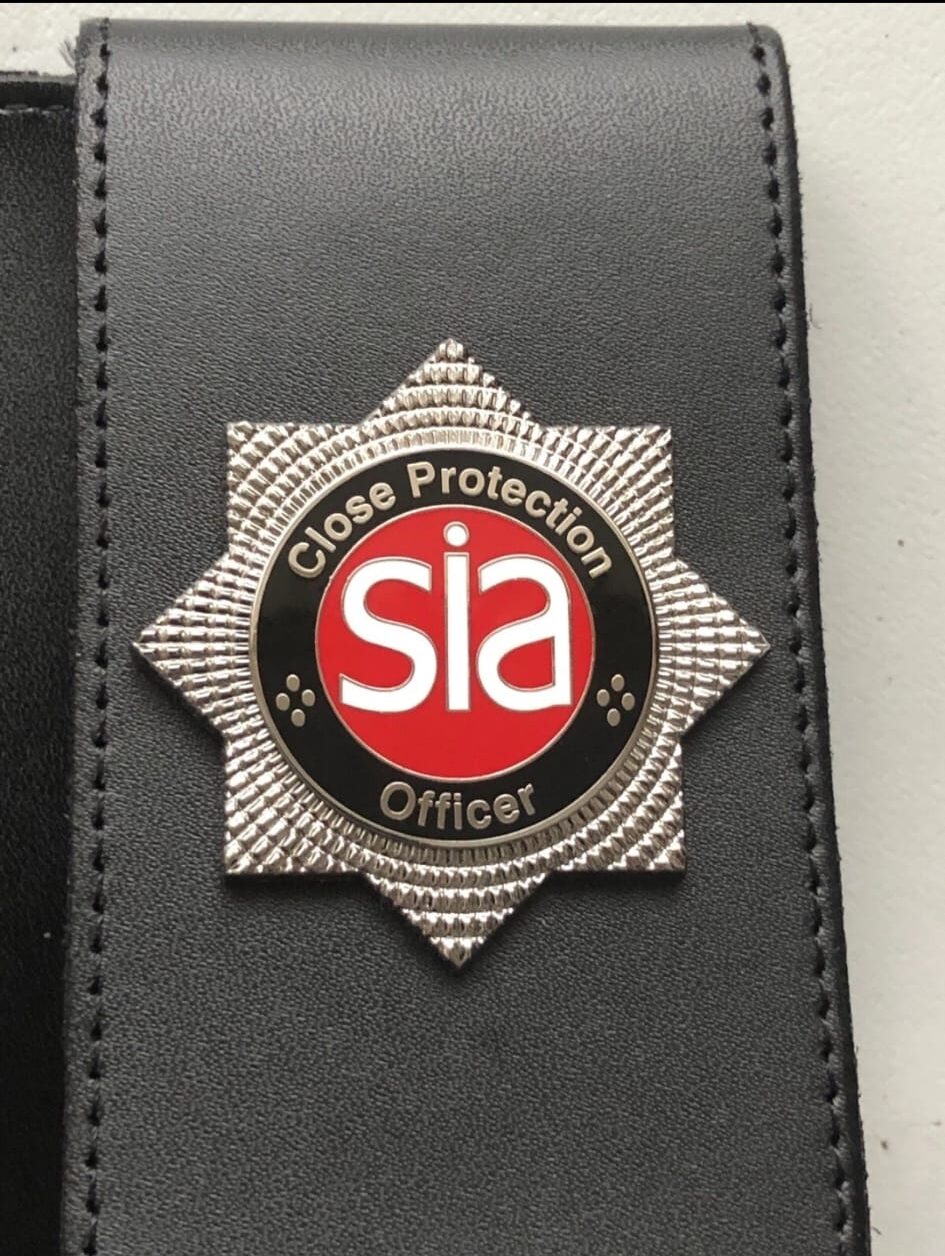
Close protection
You need a close protection licence if you guard people against physical assault or injury.
This licence also allows you to use closed circuit video surveillance for either or both of the following purposes:
- to guard premises against unauthorised access
- to guard property against damage or theft
This licence also allows you to perform the licensable activity of a door supervisor and a security guard.
Door supervision
You need a door supervisor licence if you guard licensed premises against damage, theft, unauthorised access or disorderly behaviour.
This includes using closed circuit video surveillance if it is for either or both of the following purposes:
- to guard premises against unauthorised access
- to guard property against damage or theft
‘Licensed premises’ means a venue that has a licence to do one or both of the following:
- sell alcohol for consumption on the premises
- provide regulated entertainment (for example: boxing, wrestling or film screenings)
This licence also allows you to perform the licensable activity of a security guard.
Public space surveillance (CCTV)
You need a public space surveillance (CCTV) licence if you use closed circuit video surveillance to identify people or monitor their activities for either or both of the following purposes:
- to guard premises against disorder or damage.
- to guard people against being injured or assaulted because of unlawful conduct by others.
This includes using closed circuit video surveillance:
- to stop these things from happening
- to provide information about them if they do happen, including by viewing recorded footage.
This licence also allows you to use closed circuit video surveillance for either or both of the following purposes:
- to guard premises against unauthorised access
- to guard property against damage or theft
Security guarding
You need a security guard licence to guard premises or property against damage, theft, unauthorised access or disorderly behaviour.
This includes using closed circuit video surveillance if it is for either or both of the following purposes:
- to guard premises against unauthorised access
- to guard property against damage or theft
Key holding
The key holding licence is a front line licence.
You need a key holding licence for security work that involves keeping, or controlling access to, any key or device for operating a lock.
Vehicle immobilisation
The vehicle immobiliser licence is a front line licence for security operatives working in Northern Ireland only.
You need a vehicle immobiliser licence for work that involves preventing or restricting the movement of a vehicle, or removing it, and then charging the owner to release it. This activity may involve the use of a wheel clamp.